




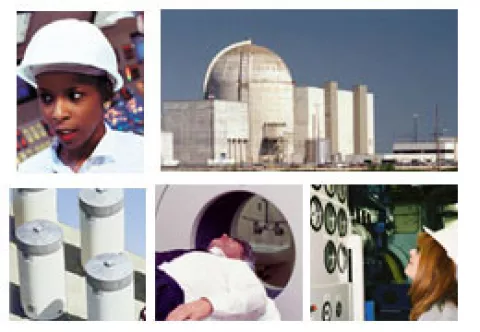
The Office of Nuclear Reactor Regulation (NRR) is responsible for accomplishing key components of the NRC's nuclear reactor safety mission. NRR conducts a broad range of regulatory activities in support of the Commission's safety and security strategic goals. These activities encompass licensing, security, and incident response for operating commercial nuclear power reactors and non-power production and utilization facilities. NRR collaborates with other headquarters and regional offices to accomplish the NRC mission.
Leadership
-
Anna Bradford
Director, NRR
-
Jacob Zimmerman
Deputy Office Director for Licensing Programs
-
Samuel S. Lee
Deputy Office Director for Technical Programs
-
Jason W. Kozal
Deputy Office Director for Nuclear Security and Incident Response
-
Victor G. Cusumano
Division of Licensing Projects II
-
Jennifer M. Whitman
Division of Risk Assessment and Safety Systems
-
Michael D. Waters
Division of Emergency Preparedness and Response
-
John B. McKirgan
Division of Security Programs
-
TBA
Division of Licensing Projects I
-
TBA
Division of Engineering
Divisions and Branches
Division of Licensing Projects I
Implements the policy, programs, and activities, including coordinating licensing and technical reviews, associated with the overall project management for operating light-water power reactors. Manages the areas of workload planning and performance management for the office's operating reactor workload and the operating reactor licensing processes. Develops processes for and provides the interoffice interface function for other special projects of critical importance to the NRC, such as plant restarts, power uprates, and the 10 CFR 2.206 petition process.
Operating Reactor Licensing Branch 1, 2, 3, and 4
The plant licensing branches manage the review and processing of license amendments and other requests requiring NRC approval, and serve as headquarters contact with licensees, the Regions and other stakeholders in matters pertaining to assigned facilities. Project Managers are assigned to each plant. The branches also provide project management of other special projects as assigned.
Operating Reactor Licensing and Data Branch 1 (ORLB1): Beaver Valley, Calvert Cliffs, FitzPatrick, Hope Creek, Limerick, Millstone, Nine Mile Point, Peach Bottom, R.E. Ginna, Salem, Seabrook, Susquehanna, and workload planning and performance management.
Operator Reactor Licensing Branch 2 (ORLB2): Brunswick, Catawba, Farley, Hatch, McGuire, North Anna, Oconee, Robinson, Shearon Harris, St. Lucie, Summer, Surry, Turkey Point, Vogtle, and the 10 CFR 2.206 petition process.
Operator Reactor Licensing Branch 3 (ORLB3): Braidwood, Byron, Clinton, TMI/Crane Clean Energy Center, Davis-Besse, D.C. Cook, Dresden, Duane Arnold, Fermi, LaSalle, Monticello, Palisades, Perry, Point Beach, Prairie Island, Quad Cities, and plant restarts.
Operator Reactor Licensing Branch 4 (ORLB4): Arkansas Nuclear One, Browns Ferry, Callaway, Columbia, Comanche Peak, Cooper, Diablo Canyon, Grand Gulf, Palo Verde, River Bend, Sequoyah, South Texas, Waterford, Watts Bar, Wolf Creek, and power uprates.
Division of Licensing Projects II
Implements the policies, programs, and activities supporting project management and reviews for license renewals, subsequent license renewals, operating light‑water reactor topical reports, and non-power production and utilization facilities (NPUF). Serves as a primary liaison with industry organizations and coordinating interoffice activities for NRR Continuity of Operations and other high‑priority projects. Performs environmental reviews for operating reactor licensing actions and license renewals in accordance with NEPA, the Endangered Species Act, and the National Historic Preservation Act, prepares Environmental Impact Statements and Environmental Assessments, coordinates with Federal, State, local, and Tribal entities, and monitors licensee compliance with endangered species protections.
Operating Reactor Topical Reports Branch
Serves as the agency’s owner of the Topical Report Program for operating reactors which enables efficiency of licensing amendment requests. The branch serves as point-of-contact and provides an overall liaison with nuclear vendors, owner's groups, and trade organizations, such as, the Nuclear Energy Institute (NEI), and the Electric Power Research Institute (EPRI). The branch also provides the NRR interface function with other NRC Offices and other special projects of critical importance to the NRC.
License Renewal Safety Branch
The license renewal projects branch manages the review and processing of license renewal and subsequent license renewal requests, and serves as headquarters contact with licensees, the Regions and other stakeholders in matters pertaining to license renewals.
License Renewal Environmental Branch
Conducts environmental reviews for license renewal reviews and operating reactor licensing actions and in accordance with the National Environmental Policy Act and related statutes. Prepares Environmental Impact Statements and Environmental Assessments and coordinates with Federal, State, Local, and Tribal partners. Monitors operating reactor licensee adherence to endangered species take limits and consults with other Federal agencies on endangered species and essential fish habitats.
Non-Power Production and Utilization Facilities Branch
Implements the policy, programs, and activities, including performing and coordinating licensing and technical reviews, associated with the overall project management for NPUFs. Implements the NRC’s safety and security inspection and operator licensing oversight programs for non-power production and utilization facilities from initial licensing to decommissioning.
Division of Engineering
The Division of Engineering (DE) provides integrated engineering and technical expertise across instrumentation and controls (analog and digital), mechanical, electrical, materials, and structural engineering to support the safe operation of nuclear facilities. The Division’s branches conduct technical reviews, support licensing and inspection activities, and lead development of regulatory infrastructure, codes, and standards. In addition, DE acts as technical liaison with international counterparts, standards committees, and external stakeholders from industry and the public.
Instrumentation and Controls Engineering Branch
ICEB reviews and evaluates the functional performance requirements, design, and operation of instrumentation and control systems for operating reactors, fuel facilities, and non‑power production and utilization facilities. The branch supports licensing, inspection, and oversight activities related to I&C in nuclear facilities. ICEB also leads strategic enhancements to the I&C infrastructure, including rulemaking, guidance development, updates to IEEE standards, and issuance of generic communications.
Mechanical Engineering Branch
MEB reviews and evaluates the design, qualification, operation, and inservice testing of mechanical systems and components in operating nuclear power plants. The branch supports licensing actions, topical report reviews, rulemaking, ASME Code updates, guidance development, and inspection activities.
Electrical Engineering Branch
EEB reviews and evaluates the functional performance requirements, design, and operation of electrical power systems for operating reactors. The branch supports licensing actions, topical report reviews, license renewal activities, rulemaking, guidance development, IEEE standard updates, and inspection support.
Materials Engineering Branch 1
MEB1 reviews and evaluates the design, inspection, and repair of vessels, reactor pressure vessel internals, and steam generators. The branch supports licensing actions, topical report reviews, license renewal activities, rulemaking, ASME Code updates, guidance development, and inspection support.
Materials Engineering Branch 2
MEB2 reviews and evaluates the design, inspection, and repair of pumps and valves (pressure‑boundary aspects), piping, and the chemical and corrosion engineering aspects of neutron‑absorbing materials and coatings. The branch supports licensing actions, topical report reviews, license renewal activities, rulemaking, ASME Code updates, guidance development, and inspection support.
Structural, Civil and Geotechnical Branch
SCGB reviews and evaluates the design and analysis of civil structures, including seismic analyses, aging management of structural and geotechnical components, and assessments of human‑induced external hazards. The branch supports licensing actions, license renewal activities, codes and standards development, guidance development, rulemaking, and inspection support related to civil structures.
Division of Risk and Safety Systems
Conducts reactor systems analysis to evaluate topical reports and other generic methodologies for fuel, nuclear, and thermal hydraulic aspects of reactor operation. Reviews fuel and reactor systems-related changes to operating reactor licenses. Develops and implements policies and guidance for the use of risk and supports risk-informed decision making across the office. Provides expertise for other risk-significant activities such as generic safety issue resolution, and event and incident response. Leads continuous improvement of generic technical specifications and provides interpretations of plant-specific technical specifications and operability. Reviews all licensing actions that affect a nuclear plant’s technical specifications. Reviews licensing actions and program changes for balance of plant systems, containments, spent fuel pool, HVAC, cranes and loads, and site hazards. Develops and implements policy and guidance for radiological consequence analysis, health physics, and fire protection. Provides oversight of radiation protection programs, fire protection programs and systems, and supports review of related licensing actions.
Nuclear Engineering Branch A
Reviews fuel and reactor systems designs, methodologies, and topical reports related to these designs. Reviews nuclear and thermal hydraulic aspects of reactor systems. Evaluates changes to operating reactor licensing bases including power uprates, supporting safety analyses for fuel transitions, topical report implementation, and changes to plant operation that impact primary plant system performance or supporting analyses. Reviews containment response and methods for operating reactor designs.
Nuclear Engineering Branch B
Same as Branch A
Technical Specifications and Plant Systems Branch
Reviews and evaluates license amendment applications and develops regulatory policy and guidance pertaining to Technical Specifications (TS) and plant systems. Implements, interprets, and assesses plant TS, and provides agency expertise for equipment operability and maintains the associated Inspection Manual Chapter. Serves as the NRC representative to the Technical Specification Task Force (TSTF), contributing to the development of generic changes to the Standard Technical Specifications to address safety and operational issues.
Plant Systems Team
Reviews and evaluates and develops regulatory policy and guidance pertaining to the functional performance requirements, design, qualification, inspection, and operation of, auxiliary, support, and balance of plant systems, HVAC and habitability systems, containment systems, new and spent fuel, diesel generator auxiliary systems, radiation waste management systems, load handling systems, and cranes. Reviews and evaluates plant methods of addressing internal and external flooding, internally and externally generated missiles, high energy line breaks outside containment, and reactor coolant leakage detection. Performs scoping and screening reviews for containment and balance-of-plant systems to support license renewal and provides support to regional inspection activities.
Risk Assessment Branch
Leads the development and implementation of risk-informed approaches to operating reactor regulations and regulatory processes, supporting efficient and reliable licensing. Develops guidance for the use of probabilistic risk assessments (PRA) and related analyses in regulatory decision-making. Conducts efficient licensing reviews of major risk-informed licensing actions and applications that offer significant operational flexibility, such as risk-informed categorization under 10 CFR 50.69 and risk-informed completion times.
Risk Assessment and Fire Protection Branch
In addition to functions performed by the Risk Assessment Branch, develops and implements risk-informed and performance-based guidance for fire protection, fire safe shutdown, fire analysis, and fire risk assessment to support regulatory decision-making. Conducts fire protection safety reviews for license renewals and power uprate applications. Evaluates operating experience involving fires or fire protection systems, disseminates information on significant issues and promotes consistent application of the fire protection regulations across Regional Offices.
Radiation Protection and Consequence Branch
Develops rules and their associated implementing guidance, and reactor licensing guidance for radiation protection, reactor design basis accident radiological consequence analysis and severe accident mitigation alternatives. Performs technical evaluations and safety reviews in support of regulatory decisions for reactor license amendments and applications using both deterministic and risk-informed approaches. Provides technical guidance and support in the area of radiation safety for reactor oversight. Evaluates operating experience to assess the significance of reportable events involving radiation protection, radiological consequence analysis, and control room habitability.
Division of Security Programs
Develops regulatory policies and conducts licensing reviews related to physical, cyber security, and information security at NRC-licensed facilities, including nuclear power reactors. Activities include reviewing licensee-submitted security-related plans (cyber, physical protection, contingency response, and training & qualification plans), and processing licensing actions such as license amendments and exemption requests. Ensures that policy and threat information are integrated into technical support activities to deter and protect against cyber attacks and radiological sabotage. Monitors and assesses the threat environment and maintains liaison with intelligence and law enforcement agencies. Directs the implementation of access authorization and fitness for duty programs at licensed facilities and to protect licensed material. Administers the NRC’s secure telecommunications and information security programs for classified information, including Sensitive Compartmented Information Facilities (SCIFs) certification.
Intelligence Liaison and Threat Assessment Branch
Assesses the threat environment affecting regulated activities, including rapid evaluation of the credibility of threats and security events. Coordinates with the intelligence and law enforcement communities, evaluates illicit trafficking events, and reviews the adequacy of NRC's design-basis threats (DBTs) based on domestic and foreign events and intelligence information. Maintains the NRC's DBTs, threat attributes, and adversary characteristics, and provides daily intelligence support to the Commission. Administers the NRC counterintelligence program and coordinates with NRC's Federal Security Coordinators on communicating threat information.
Information Security Team
Administers the NRC’s secure telecommunications, technical security, and classified information security programs. Serves as the NRC Central Office of Record for communications security (COMSEC) material and operates the agency’s secure communications center. Develops, operates, and maintains the NRC's secure communications systems, including certification of NRC's Sensitive Compartmented Information Facilities (SCIFs). Processes all requests for access to Sensitive Compartmented Information (SCI). Maintains the agency’s Restricted Data (RD) security program. Administers the Authorizing Official (AO) Program for uranium enrichment fuel facility classified systems for NRR.
Access Authorization, Fitness for Duty, and Policy Branch
Regulates and oversees the Fitness for Duty, Access Authorization, and Criminal History programs at NRC-licensed nuclear power reactors, including rulemaking, guidance development and licensing reviews. Develops and maintains contracts that support physical security, and the Fitness for Duty, Access Authorization, and Criminal History programs. Collaborates with the Physical and Cyber Security Policy and Licensing Branch to assess and resolve newly-identified security vulnerabilities, including developing mitigation measures when appropriate. Represents the NRC in various forums, and leads the coordination and development of agency positions on related issues, as well as domestic licensing and international cooperation efforts.
Physical & Cyber Security Licensing Branch
Plans, coordinates, and manages agency-wide activities related to cyber security at NRC-licensed nuclear power reactors. Responsible for rulemaking, licensing, resolving policy issues, and providing guidance and oversight for cyber security requirements. Conducts technical reviews of licensee cyber security plans and regulatory compliance and develops standard review plans to establish clear evaluation criteria and ensure consistency across licensing reviews. Works with Federal agencies, independent regulatory agencies, and non-governmental organizations to investigate cyber incidents, share best practices, reduce regulatory burden, and address emerging issues in this dynamic field.
Conducts reviews of physical security plans, contingency response plans, and training and qualification plans as part of licensing activities for NRC-licensed nuclear power reactors. Performs technical and regulatory reviews supporting rulemakings and licensing activities related to the use, storage, and disposal of nuclear and radioactive materials at these sites. Develops standard review plans to enhance consistency and evaluates industry-submitted documents intended to serve as templates for standardized power reactor licensee submittals. Coordinates with other Federal agencies and international partners to exchange technical information on security-related policy and licensing activities affecting NRC-licensed facilities.
Division of Emergency Preparedness and Response
Manages EP policies, regulations, programs, and guidance for nuclear power reactors, materials, and fuel cycle facilities. Provides technical expertise regarding EP issues and conducts technical and regulatory reviews of EP applications and amendments. Coordinates EP activities with other NRC program offices, and works with DHS, the Food and Drug Administration, the Environmental Protection Agency, and other Federal and State government agencies on EP and incident response matters. Leads development and implementation of agency policies, exercises, training, and procedures for response to incidents involving licensed facilities and activities. Coordinates incident response programs with Federal, State, and local authorities and licensees and manages the NRC Headquarters Operations Center. Implements federal requirements for continuity of government (COG) and continuity of NRC operations (COOP),and manages the NRC alternate site.
Response and Continuity Branch
Develops NRC policy, plans, program requirements, and procedures for the NRC response to incidents. Ensures that the NRC response is consistent with the NRC role and licensee responsibilities and is coordinated with Federal and State response activities. Maintains and integrates NRC response plans, procedures, and training of personnel and organizations. Conducts exercises to achieve and test readiness objectives. Serves as the agency focal point for incident response interface with the Federal Emergency Management Agency (FEMA) and other Federal agencies. Provides response planning and procedural guidance to regional offices and assesses regional office response capabilities. Manages and oversees the NRC’s Continuity of Operations program and alternate site. Develops, maintains, and integrates NRC plans, procedures, and training for the NRC COOP program to ensure appropriate alignment with agency requirements, federal continuity directives, and interagency standards. Coordinates the Continuity Working Group to ensure Federal continuity requirements are integrated across the agency.
Headquarters Operations Center Branch
Manages the NRC Headquarters Operations Center. Provides operational support for Headquarters response activities. Maintains continuous shift staffing of the Headquarters Operations Center as the Agency’s first responders to licensee events. Maintains procedures and equipment for the receipt of reports of reactor events, materials events, allegations, and other information at the Headquarters Operations Center. Provides prompt feedback to NRC Headquarters leadership and the regions regarding reported events that require immediate regulatory attention. Notifies other Federal agencies of significant events. Initiates, monitors and maintains communications with licensees during events, drills and exercises to ensure effective communication. Provides operational support to the NRC COOP program.
Emergency Preparedness Policy and Licensing Branch
Develops, manages, and revises EP policies, regulations, guidance, and generic communications. Performs technical reviews and development of safety evaluation reports for EP-related licensing actions for operating nuclear power reactors, fuel cycle facilities, and research and test reactors. Supports EP activities for operating reactors, reactors in decommissioning and existing reactor technologies, and maintains EP knowledge management and stakeholder outreach. Serves as the agency focal point for emergency preparedness program interface with the Federal Emergency Management Agency (FEMA) and other Federal agencies. Collaborates with FEMA on offsite preparedness evaluations, including initial licensing, EP program changes, reasonable assurance determinations, and resolution of allegations or 2.206 petitions. Supports international programs for emergency preparedness.