


On this page:
- Streamlining nuclear licensing at Brownfield and retired fossil fuel sites
- Characterization of Brownfield sites
- Brownfield attributes and leveraging existing or prior infrastructure, data, and permits
- New guidance for population center considerations
- Environmental streamlining opportunities
- Streamlining checklist for Brownfield sites
Streamlining nuclear licensing at Brownfield and retired fossil fuel sites
The NRC is advancing efforts to modernize licensing and oversight processes within Brownfield sites in line with Executive Order 14300, “Ordering the Reform of the Nuclear Regulatory Commission” and Section 206 of the ADVANCE Act.
NRC regulatory improvements: Efficiency without compromising safety
- Maintaining safety standards while implementing review efficiencies through timelines, licensing fee caps, reduced fees for advanced reactor applications, and reducing unnecessary regulatory burdens.
- Leveraging existing site data.
- Updating siting requirements and decommissioning funding guidance.
- Below discusses key attributes and considerations for brownfield sites as well as an applicant checklist. See here for the full Report to Congress.
Characterization of Brownfield sites

Definition: Section 101 of the Comprehensive Environmental Response, Compensation, and Liability Act of 1980 which defines “brownfield site” as “real property, the expansion, redevelopment, or reuse of which may be complicated by the presence or potential presence of a hazardous substance, pollutant, or contaminant,” with certain exceptions. Retired/retiring fossil fuel sites or other industrial sites typically fall under the brownfield site definition.
NRC Review: The NRC’s licensing review for a nuclear facility at or near a brownfield and/or retired fossil fuel site will consider environmental impacts associated with known site contamination in its National Environmental Policy Act (NEPA) document that informs the Commission’s licensing decision. Nonradiological contamination at a site falls within the jurisdiction of the individual States or the U.S. Environmental Protection Agency.
Coal Ash: The presence of coal ash on retired or retiring fossil fuel sites will be considered by the NRC in its safety and environmental reviews. The NRC’s safety review will evaluate the stability of any coal ash ponds or impoundments to ensure that its potential failure would not pose a risk to the safe operation of the nuclear power plant. The NRC’s environmental review will describe in its NEPA document the presence of any coal ash on the site for any potential overlapping impacts with the proposed action. The NRC staff would also identify if any special financial assurance considerations for future decommissioning funding might be needed.
Brownfield attributes and leveraging existing or prior infrastructure, data, and permits
Reuse of existing infrastructure
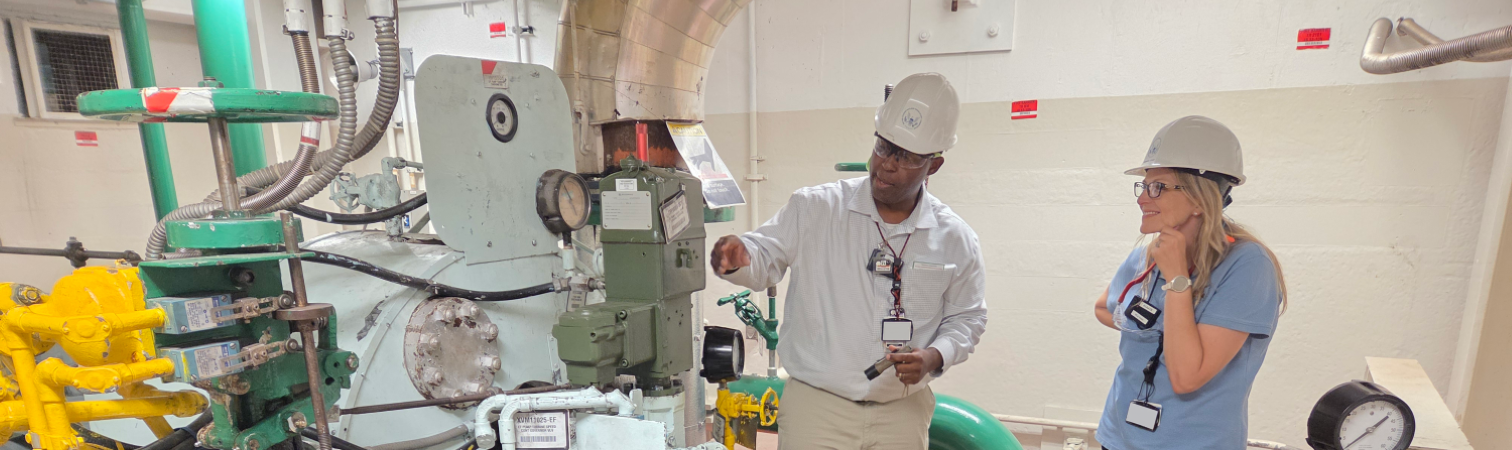
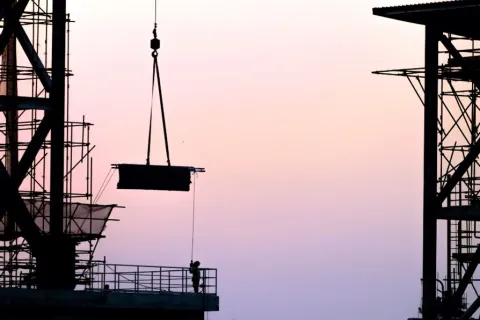
Brownfield and other industrial sites often have existing infrastructure, such as roads, rail lines, transmission lines, water pipeline corridors, water-intake structures, and switchyard components, that could potentially be reutilized to support construction and operation of a nuclear power plant on the site. Existing electric switchyards and transmission infrastructure—already designed to meet Federal Energy Regulatory Commission and North American Electric Reliability Corporation reliability standards—could be leveraged to support the electrical capacity needs of a new nuclear plant. Based on plant design specifications, applicants may modify their designs to reuse existing heat sinks, heat-sink components, and cooling components, such as rivers, ponds, intake structures, and piping, where feasible.
Leveraging existing Brownfield site characterization and data
Previously collected brownfield site data may be useful in supporting NRC reviews if it is representative of the specific characteristics of the site and can inform where additional site characterization information would be needed. Preapplication engagement with NRC staff is recommended for helping applicants and their contractors customize additional sampling plans for adequate characterization of the site for a proposed nuclear plant design at a brownfield site.
Site-specific information needed for nuclear power plant licensing siting reviews includes data for the following technical areas: meteorology, hydrology, geology, geotechnical engineering data and seismology. These data are needed to help the NRC determine if a proposed reactor site is suitable for construction and safe operation of a new nuclear plant (protected from adverse natural phenomena) and further help to support evaluation of accident analysis and emergency planning. Regulatory guidance for applicants on data collection for these technical areas is detailed in the following NRC regulatory guides (RGs): RG 1.23, “Meteorological Monitoring Programs for Nuclear Power Plants,” RG 1.132, “Geologic and Geotechnical Site Characterization Investigations for Nuclear Power Plants,” RG 1.59, "Design Basis Floods for Nuclear Power Plants," RG 1.208, “A Performance-Based Approach to Define the Site-Specific Earthquake Ground Motion,” RG 4.2, “Preparation of Environmental Reports for Nuclear Power Stations” (Section 2.2 – Water Resources [Surface Water and Groundwater]), and RG 4.26, “Volcanic Hazards Assessment for Proposed Nuclear Power Reactor Sites.”
Leveraging existing/prior permit for water, air and land use permits
Many retired or retiring fossil fuel sites and other industrial sites were built close to bodies of water for easy access to cooling water. The process for renewing or obtaining State permits for water withdraw and consumption would likely be simplified for a new nuclear plant, especially if the cooling needs are similar to the previous facility, given that a permit for water use had been previously approved. Existing air and land use permits could potentially be modified for their continuation or reuse for a new nuclear facility. When considering development of an NRC application for a new nuclear plant, engagement with State and other government entities who grant approvals that are not under the NRC’s regulatory authority is highly recommended.
New guidance for population center considerations
Most retired/retiring fossil fuel sites and other industrial sites were built relatively close to population centers of greater than 25,000. However, having nearby population centers of that size are not necessarily an impediment to NRC licensing of a new nuclear facility. The NRC staff encourages applicants to discuss population-specific information during preapplication meetings to help identify compliance pathways.
The regulations in Title 10 of the Code of Federal Regulations (10 CFR) Part 100, “Reactor Site Criteria,” incorporate specific population considerations into reactor siting proposals. RG 4.7, Revision 4, “General Site Suitability Criteria for Nuclear Power Stations,” which was updated in February 2024, introduces technology-inclusive, risk-informed, and performance-based criteria to address population density considerations for advanced reactors. The new Appendix A to RG 4.7, “Alternative Approaches to Address Population-Related Siting Considerations,” provides flexibility and alternatives to the traditional population density criteria, allowing advanced reactor applicants to demonstrate compliance with siting requirements closer to population centers of 25,000 or more than was previously permitted for large light-water reactors.
Environmental streamlining opportunities

Potential for simplified and expedited environmental reviews
Development within fossil fuel and other industrial sites has the potential to simplify and expedite environmental reviews. Since such sites have been previously disturbed and developed, many of the environmental impacts associated with a new nuclear facility have already occurred or are known. For example, construction impacts to the environment would be reduced for projects that are able to use or collocate facilities with the existing infrastructure, such as transmission lines, pipelines, roads, or railroads. This would make it less likely for the proposed action to have a reasonably foreseeable significant effect on the quality of the human environment. If the staff anticipates that a finding of no significant impact (FONSI) can be reached, the NRC could begin the environmental review by preparing an environmental assessment (EA) instead of an environmental impact statement (EIS), which would reduce the amount of time and effort both on the part of the NRC and applicants in the development of the NEPA document.
Building within a formerly developed site means that previously published NEPA documents or other environmental studies may be available. In these cases, the applicant can reference such documents, including an analysis of any new or significant information, rather than conducting new studies at the site. During the development of the NEPA document, the NRC can also incorporate by reference previous studies.
New reactor generic environmental impact statement
The NRC staff prepared the new reactor generic environmental impact statement (GEIS) to increase efficiency in NRC licensing of the building and operation of new nuclear reactors in the United States. In this GEIS, the NRC staff uses the values and assumptions in a technology-neutral plant parameter envelope (PPE) and site parameter envelope (SPE) for a new nuclear reactor to evaluate the environmental impacts of constructing and operating a nuclear reactor. This allows applicants and the NRC to avoid repeating in-depth analyses for environmental issues that fit within the specified site and plant parameters.
Additional efficiencies
The NRC staff is also implementing a wide range of efficiency efforts that would be applicable to brownfield locations. For more information on these efficiency measures, please visit the Environmental Center of Expertise webpage.
Some of the efficiencies that applicants should consider during the development of their applications for a construction permit, combined license, or related licenses for new reactors include the following:
- Engaging in the non-federal representative process under Section 7 of the Endangered Species Act(ESA) of 1973
- Conducting an applicant-prepared EA or EIS
- Referencing other NRC NEPA documents, if applicable
- Referencing other agencies’ NEPA documents, if applicable
- Conducting pre-application meetings with the NRC, and other state and Federal agencies, and Tribal nations, as applicable
Future environmental efficiencies
The NRC is currently conducting a wholesale review of its environmental regulations and guidance through the implementation of Executive Order 14300, “Ordering the Reform of the Nuclear Regulatory Commission.” Section 5(c) of Executive Order 14300 directs the NRC to “[r]evise, in consultation with the Council on Environmental Quality, the NRC’s regulations governing NRC’s compliance with NEPA regulations to reflect Congress’ 2023 amendments to the statute and the policies articulated in sections 2 and 5 of Executive Order 14154 of January 20, 2025 (Unleashing American Energy).” Similarly, in Staff Requirements Memo-SECY-24-0046, “Implementation of the Fiscal Responsibility Act of 2023 National Environmental Policy Act Amendments,” the Commission directed the NRC staff to initiate a rulemaking for 10 CFR Part 51, “Environmental Protection Regulations for Domestic Licensing and Related Regulatory Functions,” to adapt the NRC’s environmental reviews to align with the efficiencies and other changes within the 2023 amendments to NEPA.
Streamlining checklist for Brownfield sites
Below provides the applicant with a checklist for potential opportunities to streamline licensing reviews at brownfield sites. Streamlining suggestions include activities that are specific to brownfields as well as what may be applicable to any new or advanced reactor review.

- Leverage Existing Site Data, Studies, and Permits
- Gather historical, environmental, and NEPA studies, maps, and permitting records, then cite applicable portions, highlighting any changes as compared to the current environment.
- Confirm availability of existing meteorological and seismic data and other site characterization information from credible offsite sources (e.g., airports, mesoscale networks (mesonets), United States Geological Survey (USGS) hazard data).
- Reuse Existing Infrastructure
- Assess existing roads, rail lines, transmission corridors, water pipelines, and intake structures for integration into project plans.
- Explore opportunities to reuse or modify existing water, air, or land permits, or utilize information from previous permits to apply for new ones.
- Preapplication Engagement
- Meet with the NRC staff to discuss the proposed project and potential efficiencies, especially as they relate to a brownfield site.
- Early Site Permits (ESP)
- Consider applying for an ESP to reserve the site for future nuclear development.
- Plan for phased licensing, such as a limited work authorization, to address site-related issues early.
- Plant Parameter Envelopes & Standardized Site Parameters
- Use RG 4.27 for guidance on plant parameter envelopes when reactor technology is not finalized.
- Use the NRC’s draft NR GEIS for new reactors to avoid repeating specific analyses for items that fit within the site and plant parameters.
- Population-Related Siting Requirements
- Review RG 4.7 (Rev. 4) for updated, risk-informed criteria.
- Demonstrate compliance with flexible population density requirements for advanced reactors.
- Financial Assurance for Decommissioning
- Develop a site-specific cost estimate addressing liabilities from any existing radioactivity and new reactor operations.
- Ensure compliance with NRC’s decommissioning funding assurance regulations under 10 CFR Parts 50 and 52 that establish requirements for providing reasonable assurance that funds will be available for the decommissioning process.
- Meteorological & Seismic Data
- Confirm NRC acceptance criteria for offsite data per RG 1.23.
- Identify alternative meteorological data sources (e.g., airport data, mesonets, state datasets) for atmospheric dispersion modeling.
- Identify existing seismic data or site characterization information (e.g., USGS hazard data) that may be used to inform the application and to support a graded approach for site characterization.
- Decommissioning Coordination
- Leverage previously docketed information from decommissioning facilities.
- Consider strategies for accelerated license termination or partial site releases to enable new construction sooner.
- Environmental Efficiencies
- Within the environmental report, consider whether impacts are reduced due to reusing existing infrastructure or constructing within previously developed areas.
- Use NRC’s draft NR GEIS for new reactors to avoid repeating specific analyses for items that fit within the site and plant parameters.
- Consider using efficiency tools or approaches, including:
- Use of the non-federal representative process under Section 7 of the Endangered Species Act (ESA) of 1973
- Development of an applicant-prepare EA or EIS.
- Conducting pre-application meetings with NRC, and other state and Federal agencies, and Tribal nations as applicable.
- Future Opportunities
- Track rulemaking efforts associated with Executive Order 14300, “Ordering the Reform of the Nuclear Regulatory Commission.”