





Fermi America COLA Environmental Impact Statement


ABOUT:
The NRC was created as an independent agency by Congress in 1974 to ensure the safe use of radioactive materials for beneficial civilian purposes while protecting people and the environment. The NRC regulates commercial nuclear power plants and other uses of nuclear materials, such as in nuclear medicine, through licensing, inspection and enforcement of its requirements.
OUR MISSION:
The NRC protects public health and safety and advances the nation’s common defense and security by enabling the safe and secure use and deployment of civilian nuclear energy technologies and radioactive materials through efficient and reliable licensing, oversight, and regulation for the benefit of society and the environment.
OUR WORK INCLUDES:
- Determining whether it is safe to build and operate a proposed nuclear power plant at a site
- Evaluating and disclosing the environmental impacts of building and operating a nuclear power plant
Fermi America - Proposed Project Matador Nuclear Units 1–4
Background
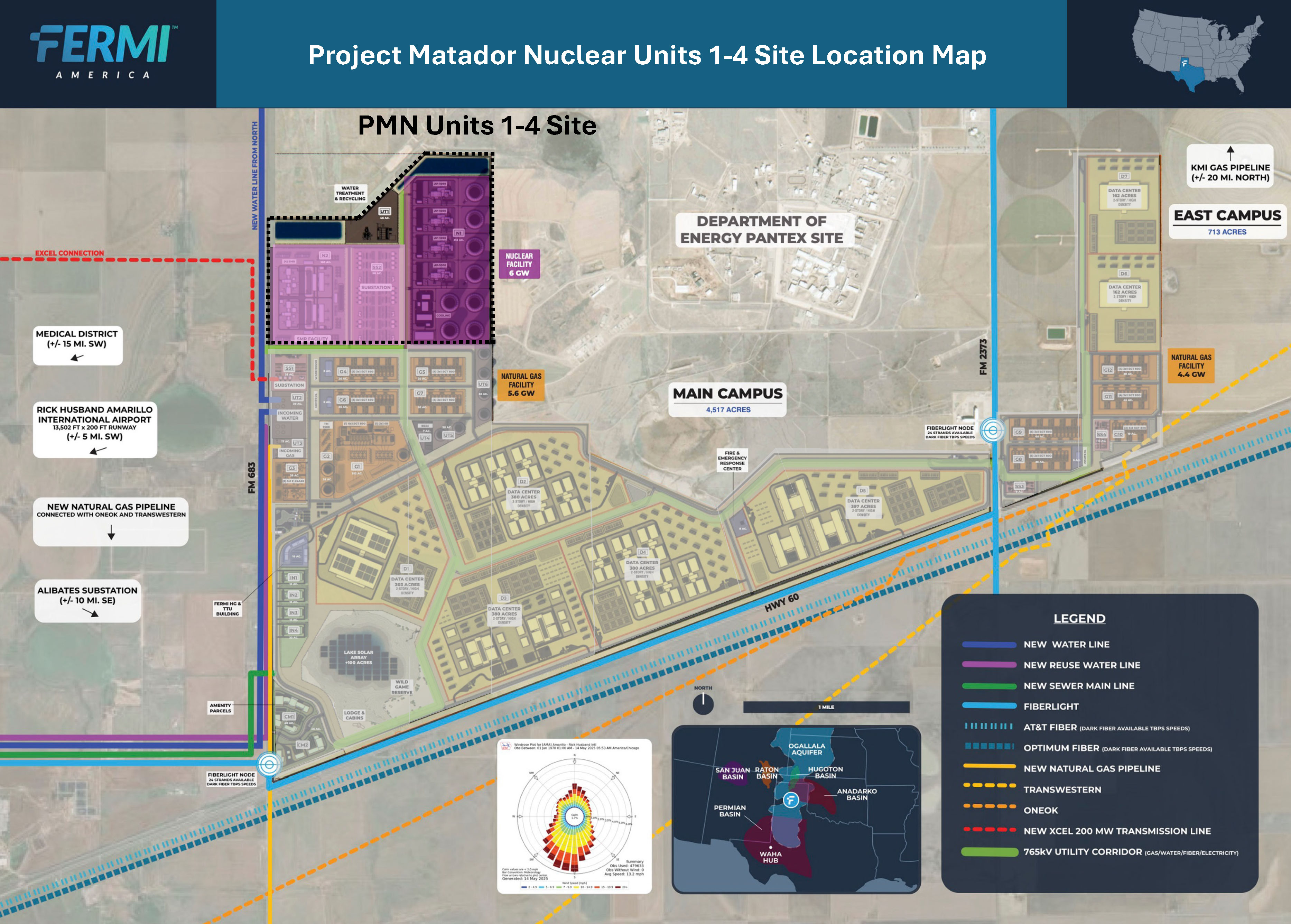
On June 17, 2025, Fermi America provided an initial submittal for combined license (COL) applications for four AP1000 reactors (Agencywide Documents and Access Management System [ADAMS] Accession No. ML25169A395). The proposed reactors would be located at the Donald J. Trump Advanced Energy & Intelligence Campus (Project Matador) in Carson County, Texas, adjacent to the U.S. Department of Energy’s Pantex Plant. The initial submittal of the application included general, financial, and environmental information. The U.S. Nuclear Regulatory Commission (NRC) acknowledged receipt of this initial submittal in a letter dated July 7, 2025 (ML25182A087).
On August 20, 2025, Fermi America submitted its second submittal of the COL applications (ML25232A199), which included non-site-specific technical chapters of the Final Safety Analysis Report and other supplemental information.
In an acceptance letter dated September 5, 2025 (ML25240A918), the NRC staff acknowledged Fermi America’s commitment to participate in a pilot project for the environmental review under the National Environmental Policy Act (NEPA) of 1969, as amended. This pilot project involves the development of an applicant-prepared draft environmental impact statement (EIS), under NRC supervision.
Proposed Federal Action
The proposed Federal action is the NRC’s decision on whether to issue the COLs to Fermi Nuclear LLC, a wholly-owned subsidiary of Fermi America, under the provisions of Title 10 of the Code of Federal Regulations (10 CFR) Part 52, for the proposed construction and operation of four AP1000 advanced passive pressurized water reactors—designated as Project Matador Nuclear Units 1–4 (PMN Units 1-4).
Purpose and Need for the Project
The purpose of PMN Units 1-4 would be to provide onsite energy generation for the Project Matador campus. The units would provide 4 gigawatts (GWs) of reliable carbon-free baseload power directly used to support Project Matador. Project Matador’s planned buildout includes 11 GW of onsite power generation for sustaining its estimated 18 million square feet of infrastructure supporting artificial intelligence (AI).
Data center power demands are increasing significantly, driven by hyperscale growth. New data center facilities individually may require 100 megawatts (MW) to 1,000 MW, and aggregate consumption could account for a significant percentage of a State’s total electricity use. For context, Texas’ grid operator, Electric Reliability Council of Texas, Inc. (ERCOT), projects a total summer capacity of 111 GW. Project Matador’s 11 GW requirement represents roughly 10 percent of ERCOT’s capacity.
The proposed Federal action—the NRC’s issuance of COLs—advances national policy objectives for decarbonization, AI infrastructure expansion, and energy security. PMN Units 1-4 would address the need for hyperscale data center-aligned, non-interruptible, and scalable power in the United States. Supporting and modernizing U.S. AI capabilities are priorities outlined in recent executive orders.
National Environmental Policy Act (NEPA) — Applicant-Prepared Draft Environmental Document Pilot
NEPA requires Federal agencies to evaluate and disclose the environmental effects of the proposed Federal action on the human environment. The NRC complies with NEPA through its regulations in 10 CFR Part 51. The regulations form the basis for the NRC’s NEPA compliance and direct the NRC staff in how to perform environmental reviews.
Pursuant to NEPA, as amended, and 42 (United States Code) U.S.C. § 4336a(f), project sponsors (applicants) may prepare environmental documents under the supervision of a lead agency, e.g., the NRC. Most importantly, the lead agency must independently evaluate the environmental document and assume responsibility for its content. Although current NRC regulations under 10 CFR Part 51 do not explicitly provide for applicant-prepared EISs, the Fiscal Responsibility Act’s (of 2023) amendments to NEPA, as implemented through the ADVANCE Act (Accelerating Deployment of Versatile, Advanced Nuclear for Clean Energy Act of 2024), direct the NRC to consider authorizing the use of an applicant-prepared environmental document as NRC’s draft environmental document. Fermi America expressed interest in participating in a pilot project utilizing the applicant-prepared method.
The lead agency is required to independently evaluate the environmental document, which for this action will be a draft EIS, and assume responsibility for its content. The NRC staff determined that preparation of an EIS is the appropriate level of NEPA review. In compliance with NRC regulations specified in the 10 CFR Part 51, “Environmental Protection Regulations for Domestic Licensing and Related Regulatory Functions,” the applicant-prepared draft EIS includes all information required by 10 CFR 51.45, “Environmental Report.”
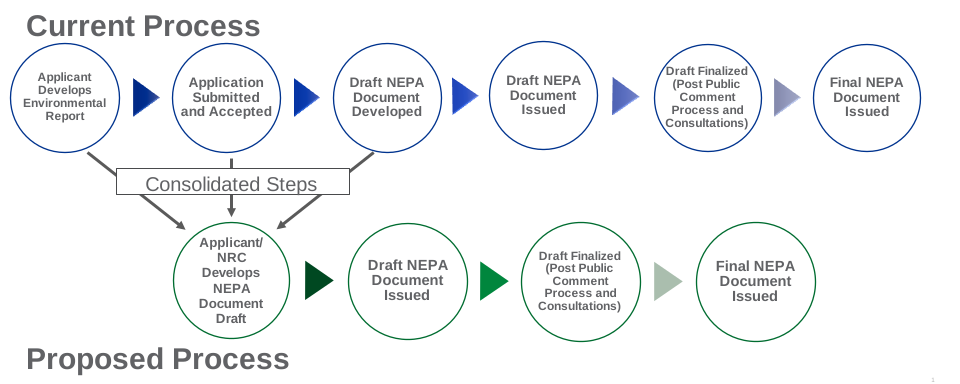
The pilot project, to submit an applicant-prepared draft EIS, with Fermi America outlines a process for applicant-prepared environmental documents, emphasizing effective coordination between the NRC and applicants. The goal is to implement a consistent, efficient environmental review process that avoids duplication of effort while maintaining NRC oversight and accountability.
Scoping—What is Scoping?
Scoping identifies and defines the range of actions, alternatives, and environmental issues to be considered in the environmental document. As such, to provide concise and informative environmental documents, the NRC scoping process is used to (1) define the proposed action; (2) determine the scope of the environmental document and identify the significant issues to be analyzed in depth; and (3) identify and eliminate from detailed study the issues that are not important or have been covered by prior environmental review(s), narrowing the discussion of these issues to a brief presentation of why they will not have a significant effect on the human environment or providing reference to their coverage elsewhere.
The scoping process starts with the Federal Register, where the NRC publishes the Notice of Intent. Public participation is key to scoping, so the NRC gathers comments from individuals, organizations, and other governmental agencies to help define the environmental analysis. Scoping helps the NRC identify significant issues to be analyzed, as well as issues already addressed in prior reviews or otherwise not needing significant analysis. The NRC considers all comments and input.
Scoping - What is Scoping?
Scoping is the process the NRC uses to identify and define the range of actions, alternatives, and environmental issues to be addressed in an environmental document. It helps determine which issues require detailed analysis and which can be excluded because they are not significant or have already been addressed in prior environmental reviews.
The scoping process begins when the NRC publishes a Notice of Intent (NOI) in the Federal Register:
- To view the FRN NOI: FRN Fermi America Scoping NOI and EIS
Through this process, the NRC:
- Defines the proposed action.
- Determines the scope of the environmental document and identifies significant issues for in-depth analysis.
- Identifies issues that do not require detailed study and explains why they are not expected to significantly affect the human environment or references prior reviews addressing them.
Public participation is a central part of scoping. The NRC gathers comments from individuals, organizations, and governmental agencies to inform and scope of the environmental analysis. All comments and input received during scoping are considered in developing the environmental review. Please refer to the “How to Comment” tab or FRN to provide comments on NRC’s NEPA scope associated with Fermi America’s Combined License (COL) application for the proposed construction and operation of four AP1000 advanced passive pressurized-water reactors—designated as Project Matador Nuclear (PMN) Units 1 - 4 (PMN Units 1-4).
What is NEPA?
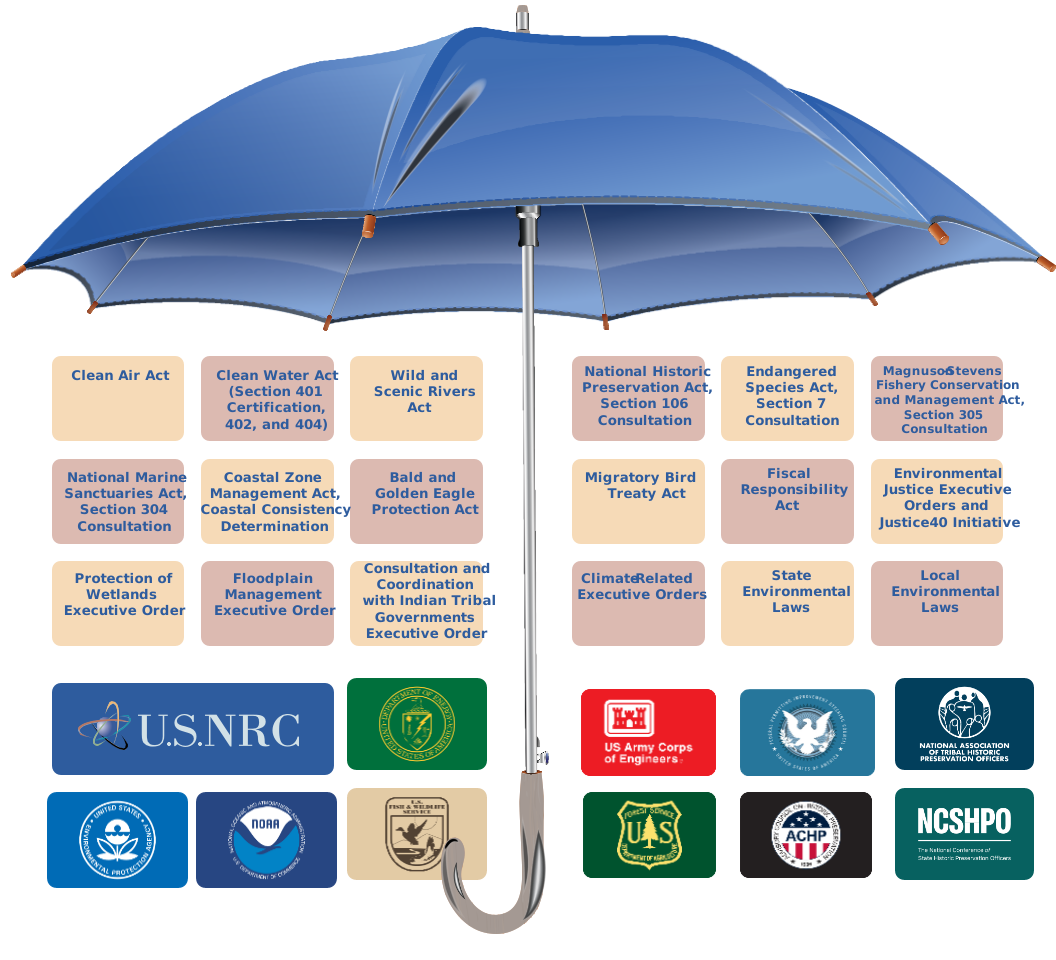
NEPA requires Federal agencies to evaluate and disclose the environmental effects of the proposed Federal action on the human environment.
The NRC complies with NEPA through its regulations in 10 CFR Part 51. The regulations form the basis for the NRC’s NEPA compliance and direct the staff on how to perform environmental reviews.
NEPA as an "Umbrella Law"
NEPA is often called an “umbrella law” because its environmental disclosure documents—such as Categorical Exclusions, Environmental Assessments, and Environmental Impact Statements—consider many other laws, executive orders, and regulations.
Environmental Review Oversight
Within the NRC, the Environmental Center of Expertise (ECOE) leads these reviews. ECOE evaluates environmental effects for actions such as new reactor licenses and license renewals.
Fermi America- Resource Areas Considered*
*Typical resources analyzed in NEPA reviews
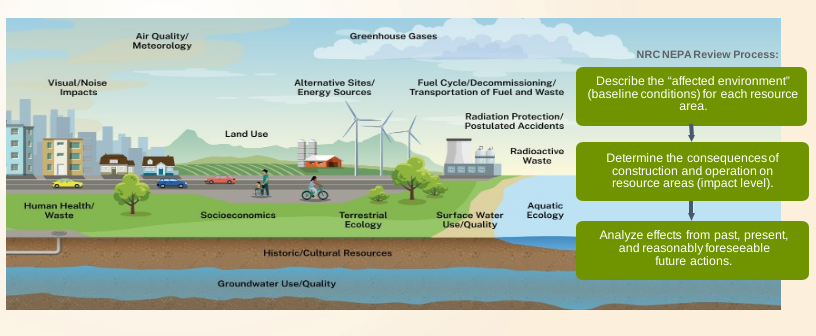
During an environmental review, NRC staff evaluates the potential impacts of a proposed action on various aspects of the human environment, called “resource areas”. The scoping process helps to define the proposed Federal action, a reasonable range of alternatives, and the environmental issues to address. For Fermi America, scoping will: (1) define the proposed Federal action; (2) determine the scope of the environmental document and identify the significant issues for detailed analysis; and (3) identify and eliminate from detailed study the issues that are not important or have been covered by prior environmental review(s).

The National Environmental Policy Act of 1969, as Amended (NEPA), requires Federal agencies to assess the environmental effects of proposed major Federal actions prior to making decisions. While NRC’s implementing regulations at 10 CFR 51.20(b) prescribe the level of NEPA review for Combined License (COL) applications, recent regulatory developments have prompted the NRC to consider whether a different level of review may be appropriate.
The National Environmental Policy Act of 1969, as Amended (NEPA), requires Federal agencies to assess the environmental effects of proposed major Federal actions prior to making decisions. While NRC’s implementing regulations at 10 CFR 51.20(b) prescribe the level of NEPA review for Combined License (COL) applications, recent regulatory developments have prompted the NRC to consider whether a different level of review may be appropriate.
Expected Efficiencies Utilized in the Fermi America Pilot
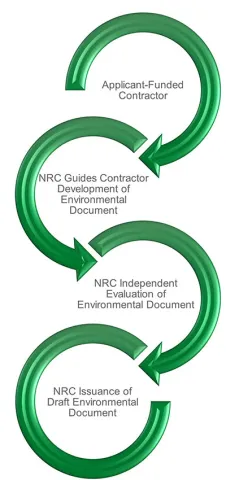
Pursuant to the National Environmental Policy Act of 1969, as Amended (NEPA), and 42 U.S.C., project sponsors (applicants) may prepare environmental documents under the supervision of a lead agency, such as the NRC. The lead agency is responsible for prescribing procedures that allow a sponsor to prepare an environmental document (EA/EIS), while also providing appropriate guidance and assistance throughout the process. Critically, the lead agency must independently evaluate the environmental document and assume responsibility for its content.
Although current NRC regulations under 10 CFR Part 51 do not explicitly authorize applicant-prepared EISs, recent amendments to NEPA under the Fiscal Responsibility Act, implemented through the ADVANCE Act, direct the NRC to consider allowing an applicant-prepared environmental document to serve as the NRC’s draft environmental document. Fermi America expressed interest in participating in a pilot project using this approach.
The pilot project with Fermi America outlines a process for an applicant-prepared environmental document, emphasizing effective coordination between the NRC and the applicant. The goal is to implement a consistent, efficient environmental review process that avoids duplication of effort while maintaining NRC oversight and accountability.
To achieve this, NRC project management staff have defined a process in which NRC staff oversees and reviews—without duplicating—the environmental analysis. This approach aligns with practices used by many other Federal agencies when reviewing applications for funding, licenses, and permits.
Fiscal Responsibility Act (FRA) / ADVANCE ACT
Fiscal Responsibility Act (FRA), signed into law on June 3, 2023:
Some specific FRA-driven NEPA changes include:
- Mandatory deadlines and page limits for EAs and EISs.
- Requirements regarding roles of lead, participating, and cooperating agencies.
Accelerating Deployment of Versatile, Advanced Nuclear for Clean Energy Act of 2024 (ADVANCE Act), signed into law in July 2024:
Requires the NRC to take actions, including:
- Submit to Congress in January 2025 a report on efforts to facilitate efficient, timely, and predictable environmental reviews of applications.
- Assess licensing review process for new nuclear facilities at former fossil-fuel power plant sites and brownfield sites.
- Develop strategies and guidance for microreactors.
In line with the FRA amendments to NEPA Section 107(f), the ADVANCE Act directs the NRC to consider authorizing the use of an applicant-prepared environmental document. In SECY-24-0046, the NRC staff recommended rulemaking to develop new 10 CFR Part 51 regulations to explicitly allow for applicant preparation of a draft environmental document (EA/EIS) that will serve, under appropriate NRC supervision, as the draft environmental document required for NEPA analysis.
Applicant-Prepared Environmental Document
Expected Benefits
| In a participant letter issued by the NRC dated November 4, 2025 (NRC ADAMS accession number ML25302A444), and in accordance with NEPA, as amended, and pursuant to 42 U.S.C. § 4336a(f), the NRC formally acknowledged Fermi America’s election to participate in the NRC’s voluntary pilot project for the preparation of an applicant-prepared draft EIS. The letter also outlined the respective responsibilities and commitments of both parties, establishing a framework to guide the environmental review process under the pilot project initiative. As this is a first-of-a-kind NRC NEPA review utilizing this process, the NRC staff plan to work interactively with Fermi America Nuclear LLC, a wholly-owned subsidiary of Fermi America, and its contractors to establish an agreed-upon methodology early in the process to minimize potential delays related to rework during NRC EIS review and concurrence. It is anticipated that implementation of streamlining tools and participation in the pilot project will help the project reduce review costs and meet new NEPA requirements, e.g., page limits and time frames. |
What is the National Historic Preservation Act?
- Congress enacted the National Historic Preservation Act of 1966, as Amended (NHPA), mandating that Federal decision-makers consider historic properties during project planning. The NHPA established:
- Advisory Council on Historic Preservation (ACHP), State Historic Preservation Offices (SHPOs)/Tribal Historic Preservation Offices (THPOs), and the National Register of Historic Places.
- Section 106 of the NHPA requires Federal agencies to take into account the effects of their undertakings on historic properties and consult with the ACHP, as appropriate, and relevant SHPO(s) and/or THPO(s), Indian Tribes, interested parties with a demonstrated interest in the project, and the public.
- An undertaking for the NRC is the issuance of a license (e.g., combined license), permit, or other approval.
- The NRC conducts the Section 106 process in accordance with the implementing regulations, "Protection of Historic Properties," 36 CFR Part 800. The goal of the Section 106 process is to identify and to consider historic properties that might be affected by an undertaking and to attempt to resolve any adverse effects through consultation.
- In accordance with 36 CFR 800.1(c), the NRC must complete the Section 106 process prior to making its decision on the request for the licensing action.
- The NHPA Section 106 regulations at 36 CFR 800.8(c) allow Federal agencies to coordinate Section 106 consultation requirements through the NEPA.
- NEPA requires Federal agencies to evaluate the impacts of proposed Federal actions on the human environment and the cultural environment.
NHPA Section 106 Flowchart

Source: ACHP.
What is the Endangered Species Act?
- The ESA is a Federal law passed in 1973 to protect plants and animals that are at risk of extinction and the habitats they depend on to survive.
- The law is carried out by two Federal agencies:
- U.S. Fish and Wildlife Service (FWS), which covers terrestrial and freshwater species.
- National Marine Fisheries Service (NMFS) under the National Oceanic and Atmospheric Administration (NOAA), which covers marine and migratory fish species.
- Under the ESA, species can be listed as endangered or threatened and it is prohibited to take listed species or remove and reduce to possession listed plants without the Service(s) exempting such take or possession.
- "Take" means to harass, harm, pursue, hunt, shoot, wound, kill, trap, capture, or collect, or to attempt to engage in any such conduct.
- "Remove and reduce to possession" means maliciously damage or destroy a listed plant; or remove, cut, dig up, or damage or destroy a listed plant species.
How Does the ESA Affect Federal Projects?
- Federal agencies must consider endangered species when planning or approving projects.
- If a Federal action (such as issuing a license for a Combined License) could affect a listed species or its habitat, the agency must consult with FWS and/or NMFS. This process is called, Section 7 Consultation.
- In some cases, the NRC can designate an applicant as a non-Federal representative (NFR) to conduct informal consultation (50 CFR 402.08).
- The NFR would then either conduct an informal consultation or prepare a biological assessment in support of an informal or formal consultation, but the Federal agency is still ultimately responsible and maintains decision-making authority.

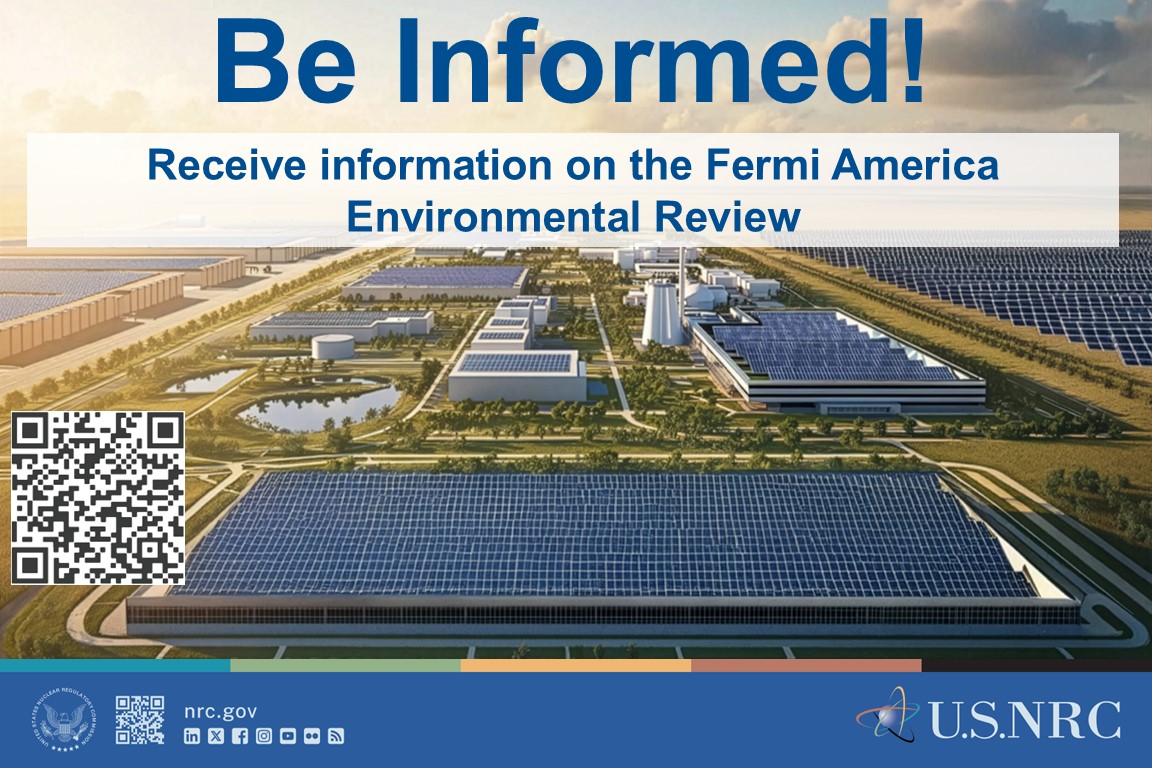
To get on the mailing list, scan the QR code or visit Govdelivery and follow the on-screen prompts (new users may need to create an account), find and check the “New Reactors” subscription topic, and then click on “Fermi America Applicant-Prepared EIS Environmental Review” in the “New Reactors” topic area.
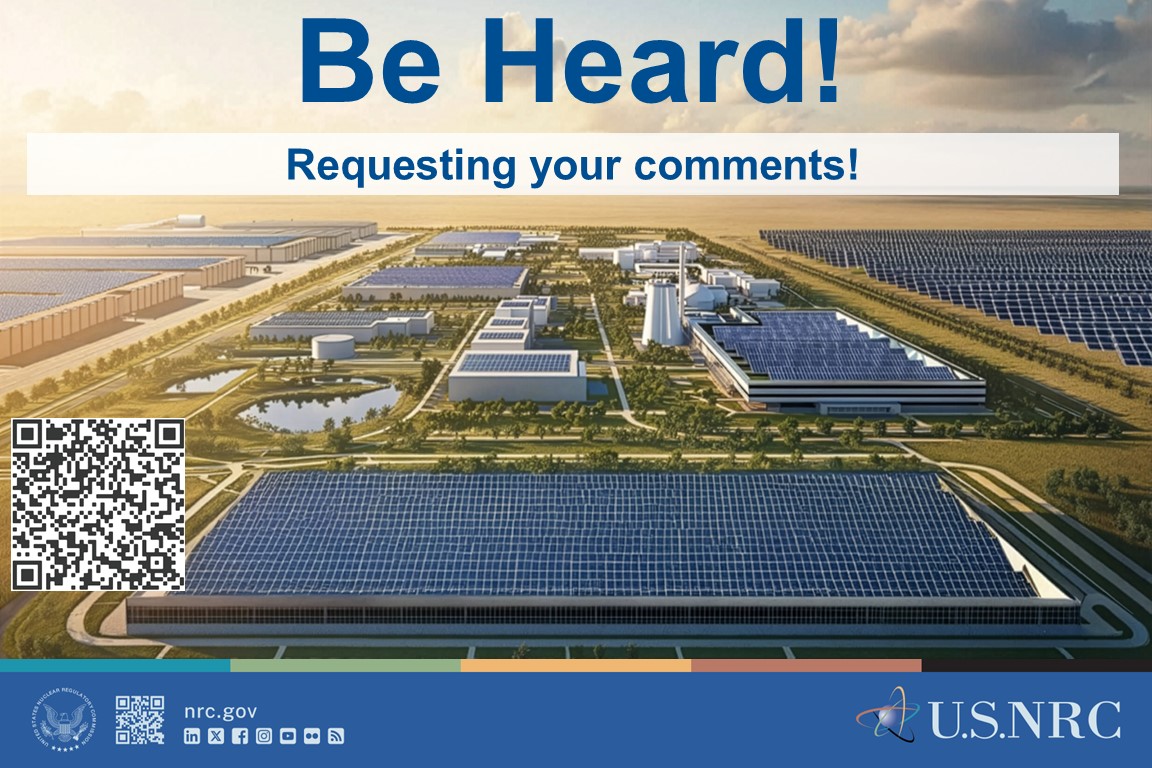
Scan QR code to send your comments via email to FermiAmericaEnvironmental@nrc.gov with the subject line: Email Comment Related to the Environmental Review for the Fermi America Project
Or Visit regulations.gov and search for Docket ID: NRC-2026-0100
Page Last Reviewed/Updated Monday, March 23, 2026
Page Last Reviewed/Updated Monday, March 23, 2026