




The NRC is modernizing nrc.gov with an updated design and improved navigation to enhance usability. We are committed to a smooth transition and will work to minimize any disruption. The site may be briefly unavailable at times during launch. Thank you for your patience.
Radioactive Symbol on Transportation Packages
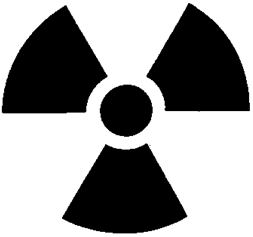
For transportation purposes, radioactive material is defined as any material which has a specific activity greater than 0.002 microcuries per gram. This definition does not specify a quantity, only a concentration. As an example, pure cobalt-60 has a specific activity of 1,000 curies per gram, which is about one trillion times greater than the definition. However, uranium-238 has a specific activity of only 0.3 microcuries per gram, which is only about 150 times greater than the definition.
Although they both exceed the definition of radioactive material in their pure form, either of these materials could be uniformly mixed with enough substance, such as dirt, which would cause the concentration to fall below the definition. In the case of uranium-238, if one gram were mixed with about 150 grams of dirt (about 1/3 of a pound), the concentration could be classified as non-radioactive.
Remember, however, that the definition of radioactive material above only applies for transportation.
Page Last Reviewed/Updated Thursday, August 27, 2026
Page Last Reviewed/Updated Thursday, August 27, 2026