



| Map | Description |
|---|---|
 | A Typical Boiling-Water Reactor |
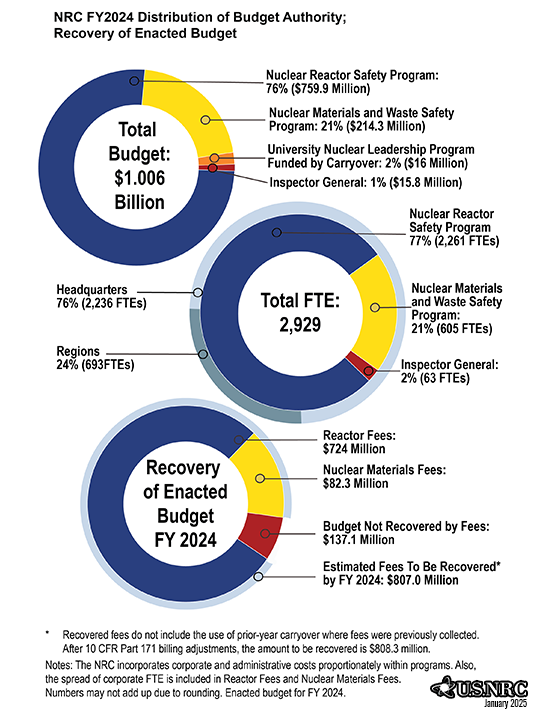 | NRC FY 2024 Distribution of Enacted Budget Authority; Recovery of NRC Enacted Budget |
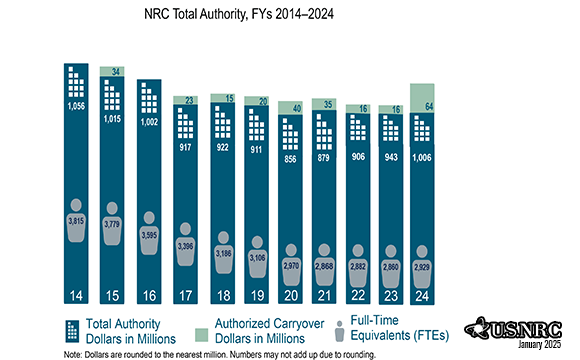 | NRC Total Authority, FYs 2014-2024 |
 | NRC Research Funding, FY 2023 |
 | Commercial Irradiator |
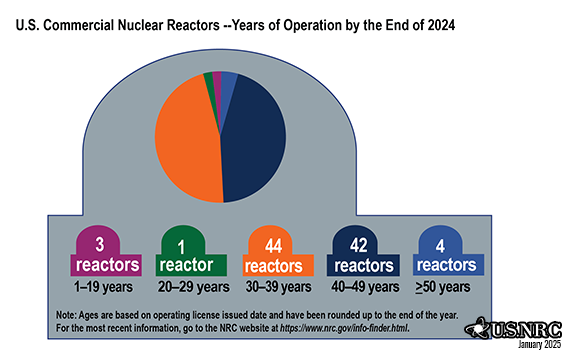 | U.S. Commercial Nuclear Power Reactors–Years of Operation by the End of 2024 |
 | Day in the Life of an NRC Resident Inspector |
 | Dry Cask Storage |
 | Dry Storage of Spent Nuclear Fuel |
 | Emergency Planning Zones |
 | Fuel Assembly |
 | Gas Centrifuge Process |
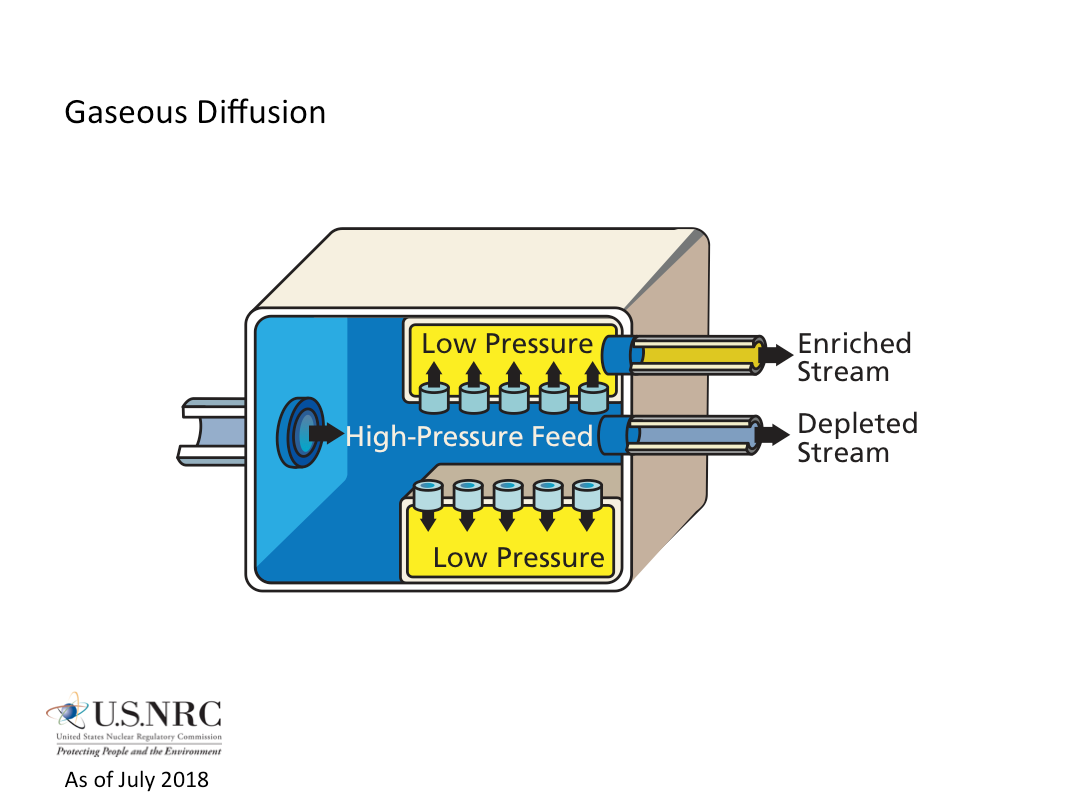 | Gaseous Diffusion |
 | Gauging Devices |
 | Heap Leach Recovery Process |
 | How We Regulate |
 | How We Regulate (with text) |
 | The International Nuclear and Radiological Event Scale |
 | The In Situ Uranium Recovery Process (with text) |
 | The In Situ Uranium Recovery Process |
 | License Renewal Process |
 | NRC Approach to Source Security |
 | Low-Level Radioactive Waste Disposal |
 | Two-Step Licensing Process |
 | Combined License Application Review Process |
 | Periodic Table of Elements |
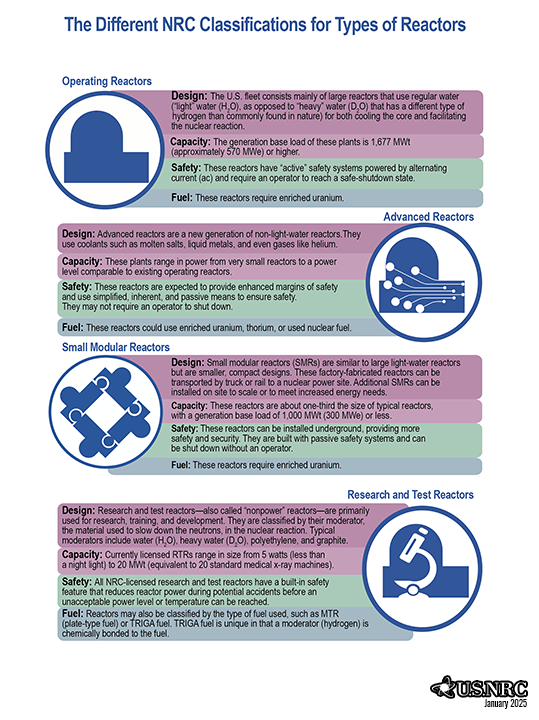 | The Different NRC Classification for Types of Reactors - (All) |
 | The Nuclear Fuel Cycle |
 | Nuclear Radiation |
 | Nuclear Reaction |
 | Nuclear Share of Electricity Generated by Country |
 | NRC Post-Fukushima Safety Enhancements |
 | A Typical Pressurized Water Reactor |
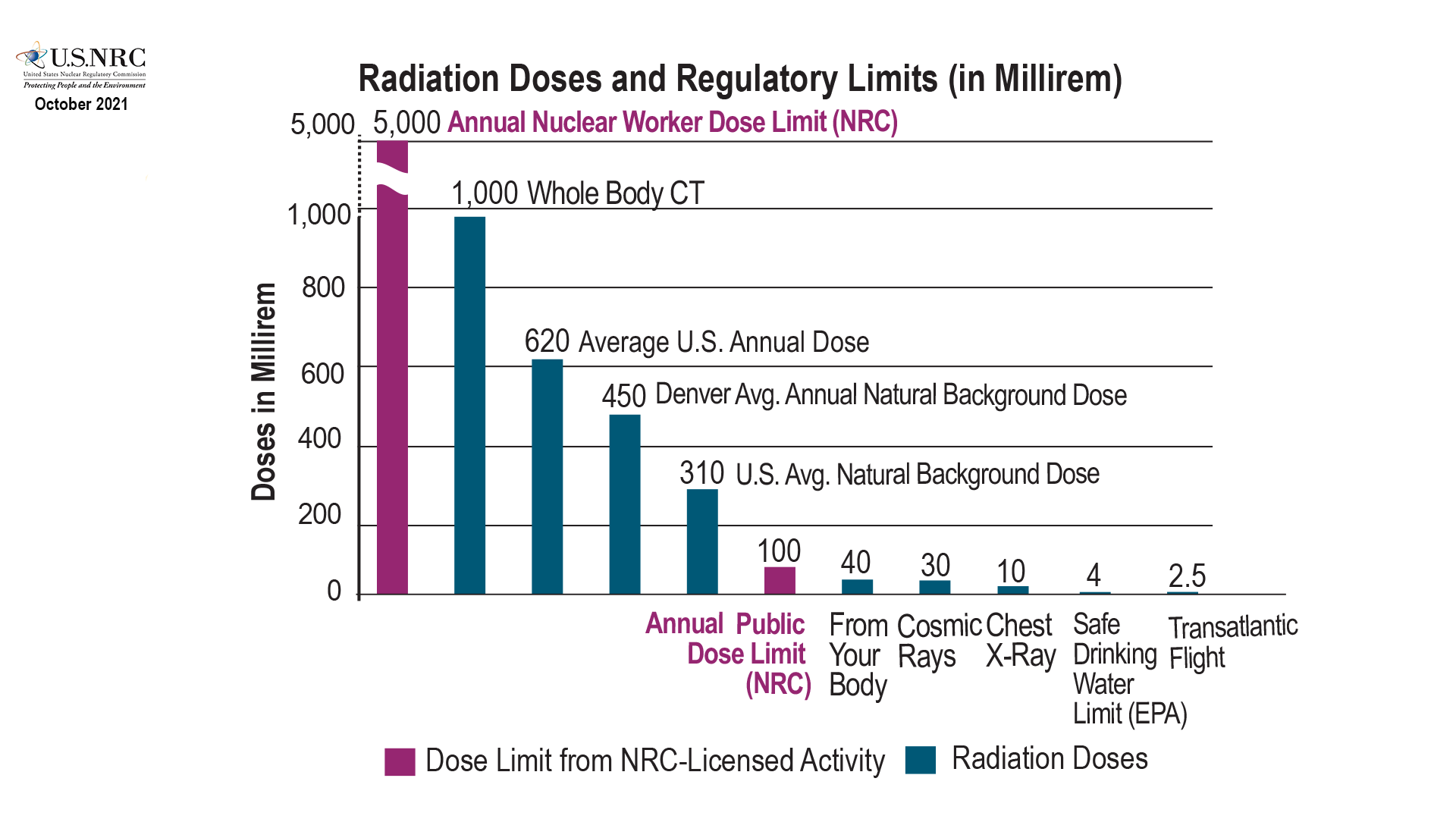 | Radiation Doses and Regulatory Limits |
 | Radiation Warning Symbol |
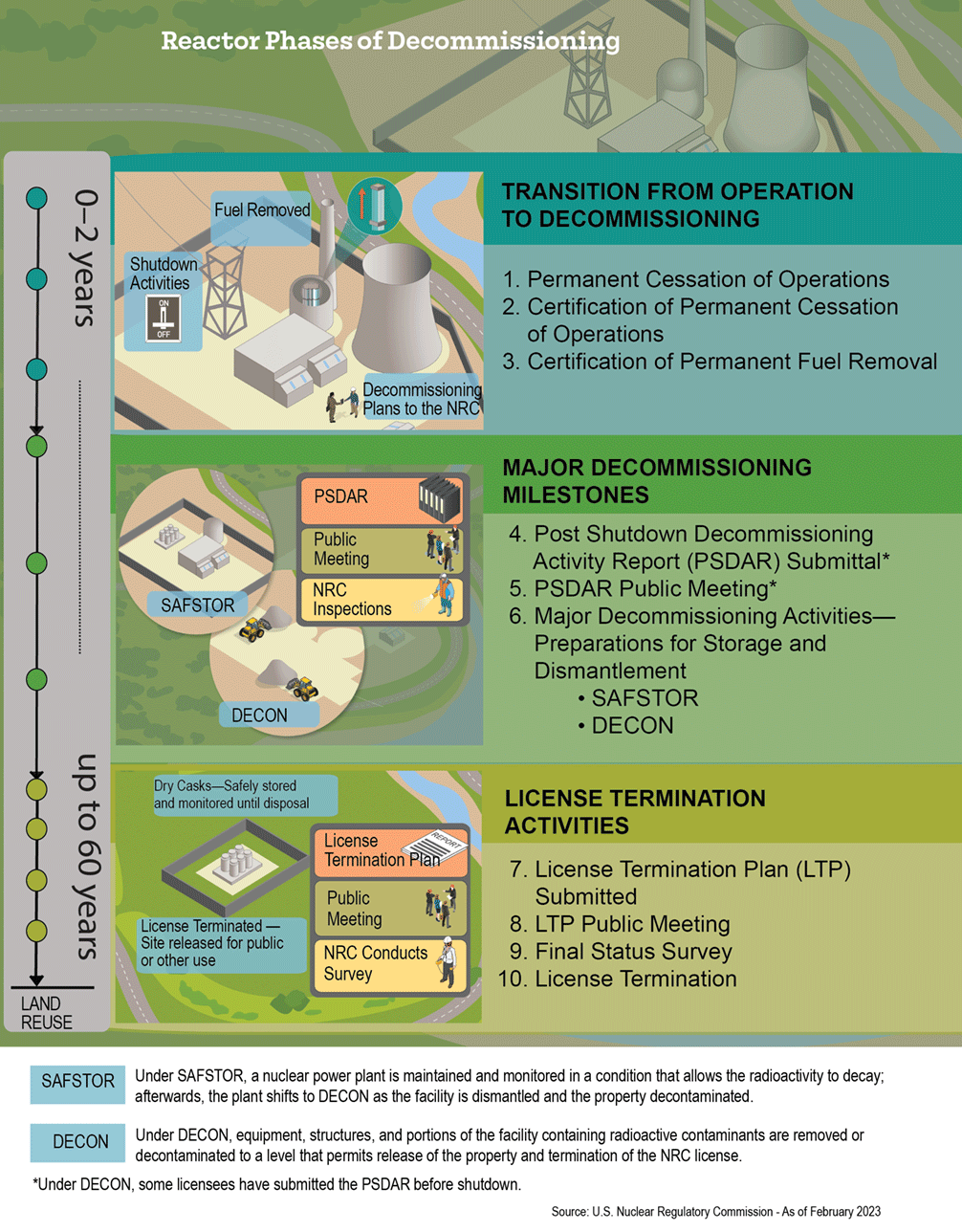 | Reactor Decommissioning Overview Timeline |
 | Reactor Oversight Action Matrix Performance Indicators |
 | Reactor Oversight Framework |
 | Boiling-Water Reactor Refueling |
 | Pressurized-Water Reactor Refueling |
 | Ensuring Safe Spent Fuel Shipping Containers |
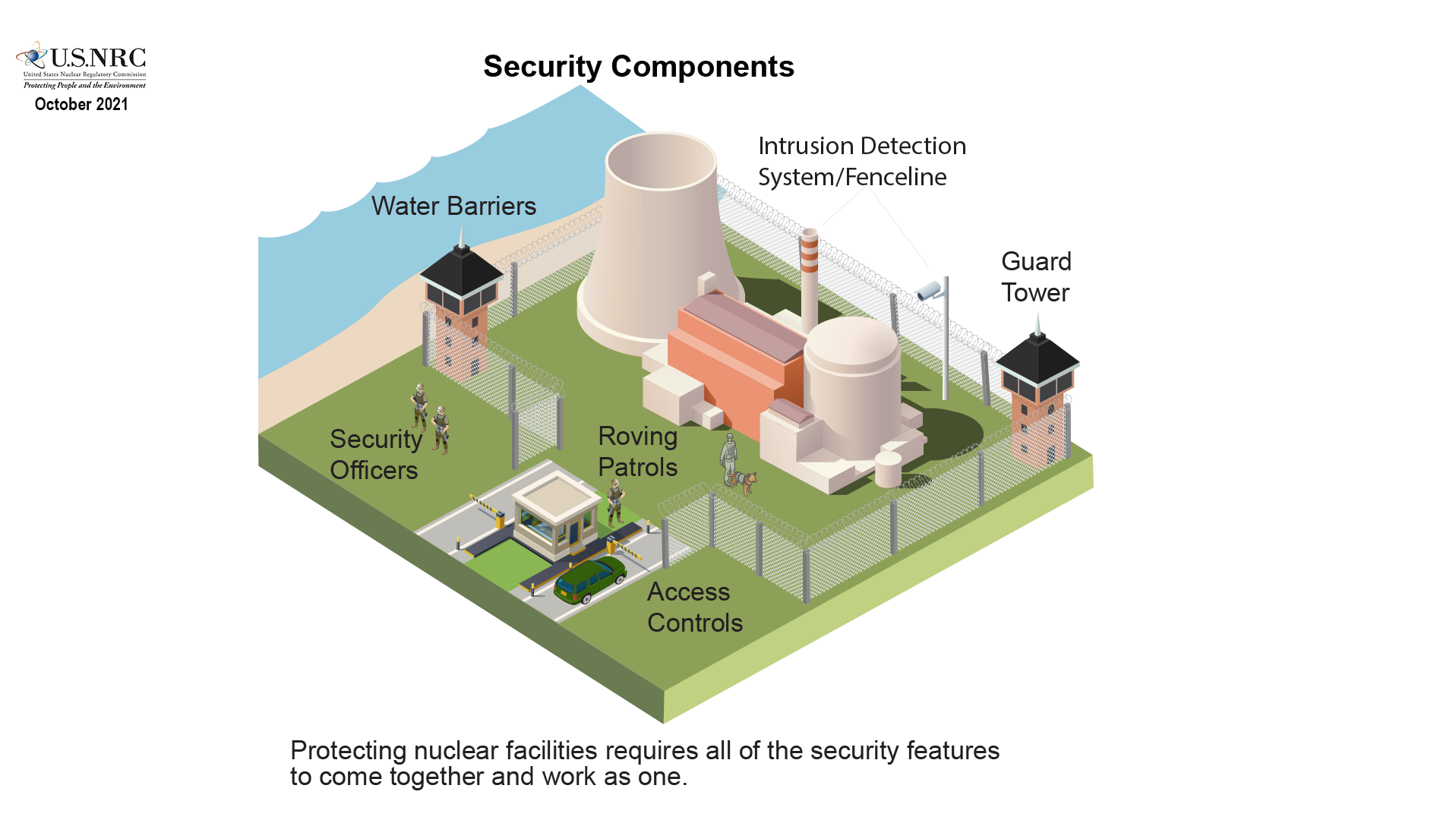 | Security Components |
 | Simplified Fuel Fabrication Process |
 | Size Comparison of Commercial and Research Reactors |
 | Spent Fuel Generation and Storage After Use (All) |
 | Spent Fuel Generation and Storage After Use (Nuclear Reactor) |
 | Spent Fuel Generation and Storage After Use (Fuel Assembly) |
 | Spent Fuel Generation and Storage After Use (Spent Fuel Pool & Fuel Assembly bundle) |
 | NRC Rulemaking Process |
 | Uranium |
 | U.S. Electric Share and Generation by Energy Source |
 | The NRC’s Enterprisewide Strategy on Artificial Intelligence |
 | NRC Licensed Operating Nuclear Reactor Uprates |
Page Last Reviewed/Updated Friday, October 02, 2026